In the 1960’s we experienced war, cultural upheaval, exploration of the unknown, and a creative explosion in the arts. But, for my money, it was the 90’s that was the real decade of turmoil, discovery, and creativity – the 1490’s.
Technology took a leap forward with DaVinci’s oil lamp in 1491 – its flame is enclosed in a glass tube placed inside a water-filled glass globe
In 1492, The Emir of Granada, Muhammad XII, surrendered to the army of Ferdinand II of Aragon and Isabella I of Castile bringing to an end the 780 years of Muslim control of Andalusia.
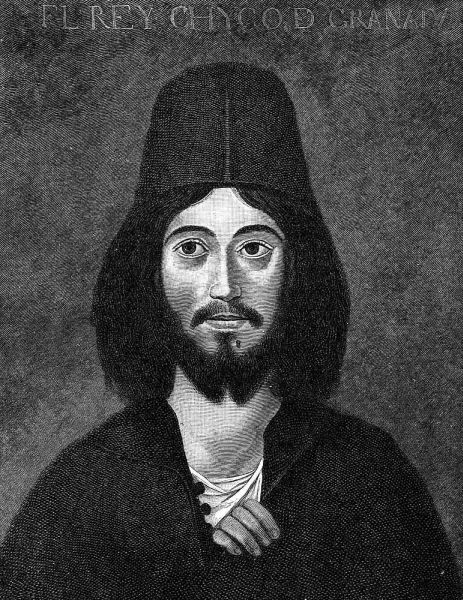
Muhammad XII
In 1492, The Pentateuch, the first five books of the Old Testament, or Torah, was published for the first time.
Columbus set out to reach the orient by sailing west and stumbled on the “new world” in 1492, although it wasn’t really “new” to the people living there. The largest and slowest of his three ships, the Santa Maria, went aground on what is now Haiti and sank on a calm night in December. Only the cabin boy was steering the ship at the time as everyone else was asleep.
In 1492, the Spanish Inquisition, determined to enforce Catholicism and root out its enemies, was picking up steam. The Catholic monarchs issued the Alhambra Decree that forced the Jews of Castile and Aragon to convert, leave, or die. 200,000 Jews converted to Catholicism and between 40,000 and 100,000 were expelled. The Alhambra Decree was revoked in 1968.

Ferdinand and Isabella
The most fortunate of the expelled Jews succeeded in escaping to Turkey. Constantinople had fallen to Muslim rule in 1453. Sultan Bajazet II welcomed the expelled Jews warmly. “How can you call Ferdinand of Aragon a wise king,” he was fond of asking, “the same Ferdinand who impoverished his own land and enriched ours?”

Istanbul in 1493
In 1493, the Jews were expelled from Sicily
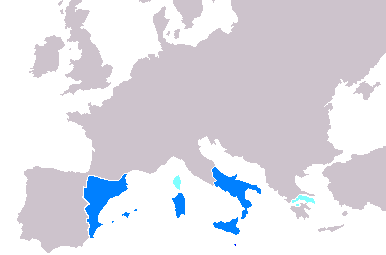
The Aragonese Empire
Florence was the artistic, commercial, and homosexual capital of the known world, but in 1495, Girolamo Savonarola held it in thrall with his prophecies of Florentine greatness. “Florence will be more glorious, more powerful and richer than ever, extending its wings farther than anyone can imagine”. He had been assigned to Florence in 1490 by Lorenzo de Medeci, who died in 1492. Savonarola became a fierce critic of the Medecis and contributed to their downfall in 1494.
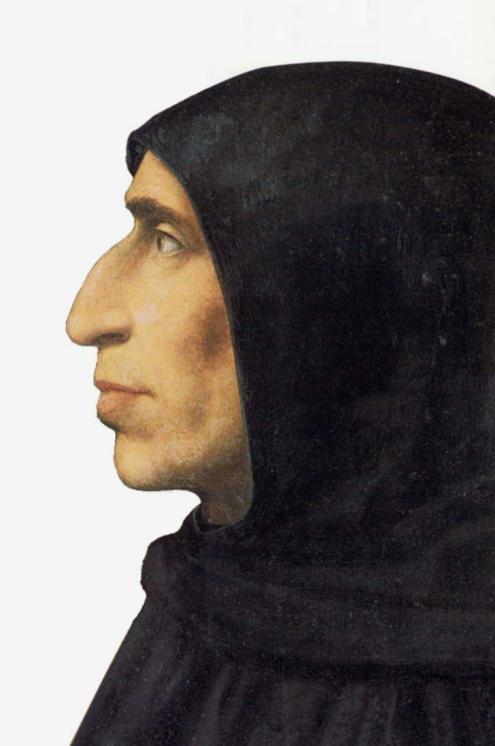
Savonarola
In 1495, Savonarola began hosting his regular Bonfire of the Vanities. Anything associated with sin was thrown on the fire – combs, mirrors, jewelry, artwork, books, playing cards, cosmetics, fine clothing, musical instruments. Even Botticelli, swept up in Savonarola’s preaching, allegedly threw some of his paintings on the bonfire.
In 1496, King Manuel of Portugal concluded an agreement to marry Isabella, the daughter of Spain’s monarchs. As a condition of the marriage, the Spanish royal family insisted that Portugal expel her Jews. Only a few were actually expelled; tens of thousands of others were forcibly converted to Christianity on pain of death. The chief rabbi, Simon Maimi, was one of those who refused to convert. He was kept buried in earth up to his neck for seven days until he died. In the final analysis, all of these events took place because of the relentless will of one man, Tomas de Torquemada, the first Grand Inquisitor, who died in 1498.

Torquemada
In 1497, Savonarola was excommunicated. In 1498, he was condemned as a heretic and schismatic, and hanged in the Piazza della Signoria (live cam).

The Murder of Savonarola
The Pieta, perhaps the most beautiful single object ever produced by a man, was sculpted by Michelangelo in 1498.

Da Vinci’s “Last Supper”, painted on the wall in the dining room of the monastery at Santa Maria delle Grazie in Milan, was completed in 1498
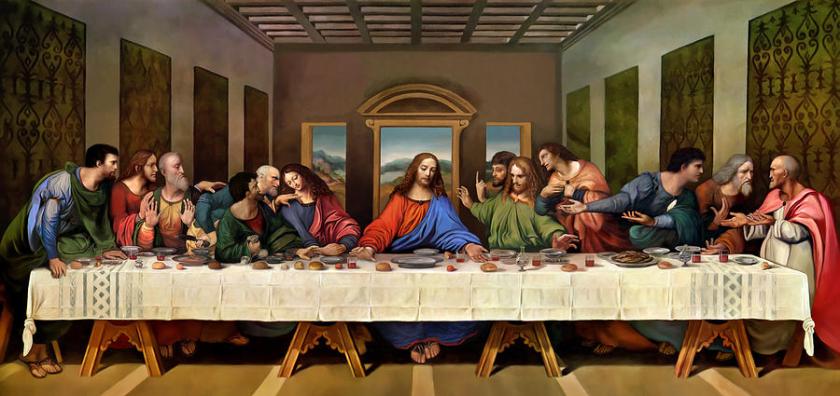
No doubt about it. The 1490’s were a wild ride with lots of high points and lots of lows.
 Get Off My Lawn
I can’t see her name mentioned without being reminded of this quote:
“I have caused great calamities. I have depopulated provinces and
kingdoms. But I did it for the love of Christ and his Holy Mother.” —
Queen Isabella of Spain
LikeLike