One of the biggest problems with the Tweety Administration is that it sucks the life out of the news cycle – there’s simply no oxygen left for anything that doesn’t have the word “Trump” in it. It sucks the life out of the news, and out of culture, and out of the internet. This week it even seemed like it might suck the life out of life itself.
So I forgive you if you didn’t note the passing last week of Glen Campbell at age 81. Maybe you never saw a link to click on to read about it, or maybe you ignored the link and thought, “Yeah, I get it. Wichita Lineman, Galveston, country music dude. So what? Struggled with alcoholism, addiction, and ultimately Alzheimer’s? Yeah, like a lot of people. Boo Hoo.”
I admit that my own first thought was that I didn’t need to think too much about the guy who had that All American, red white and blue, clean-as-a-whistle TV show, “The Glen Campbell Goodtime Hour”, from 1969-1972, at the height of the Viet Nam War, when what we needed was the exact opposite.
But then I remembered Glen Campbell the musician. That boy could play.
His solo career took off with the release of “Gentle On My Mind” in 1967. That changed everything for him, and was the start of whatever most people know about him.
But before that, Glen Campbell was a charter member of The Wrecking Crew, the group of studio musicians that played on virtually every record produced in Los Angeles in the 1960’s and early 1970’s. And I mean everything. From Sinatra and Dean Martin, to Elvis, Nat King Cole, Bobby Darin, Ricky Nelson, Jan and Dean, The Monkees, the Ronettes, The Mamas and the Papas, Bob Dylan. If it was produced in L.A., Glen Campbell probably played on it. All genres, all styles, all tempos, all arrangements.
If you want to find out who was really playing on all those Beach Boys or Byrds records or who really was Phil Spector’s “Wall of Sound”, there’s a Netflix documentary for you to stream called “The Wrecking Crew”. As a bonus, you’ll also find out something about the greatest female musician you never heard of, Carole Kaye.
Check out the T.A.M.I. Show sometime for a trip down Memory Lane, and to get a tiny feel for their versatility. They played every tune for that show.
Even after Glen Campbell became a household name and a huge star, he returned often to the studio to continue playing with them on other people’s records. That’s how good they were and how much they enjoyed playing together.
Playing with The Wrecking Crew meant you were one of the best studio players in the profession, meaning you were one of the best professional musicians in the country. You couldn’t make a mistake – it was expensive to make a record, and there was no budget for overtime for the band or to keep the studio an extra hour. Campbell mainly played rhythm guitar, as he never learned to read music beyond chord charts, but his musicianship was as good as there was.
Glen was a modest and self-effacing guy, the seventh of twelve children born to a poor family in Arkansas. They had no electricity. He picked cotton for $1.25 per hundred pounds, and said, “A dollar in those days looked as big as a saddle blanket.”
He got a five-dollar guitar when he was four and his dad made a capo for it out of a corncob and a nail. He was playing on local radio by the time he was six. He never had any formal musical training, practiced after working in the fields, and admired Django Reinhardt more than any other player he’d heard.
He dropped out of school at 14, worked menial jobs and moved to New Mexico at 17 to start his career as a musician with his uncle’s band. He moved to L.A. at 23 and began work as a session musician, and you know the rest.
He died last week in Nashville, six years after first being diagnosed with Alzheimer’s. He was great at what he did and made a lot of people happy.
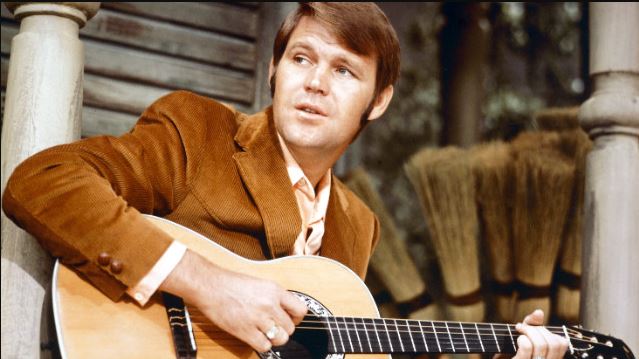
Youthful Success
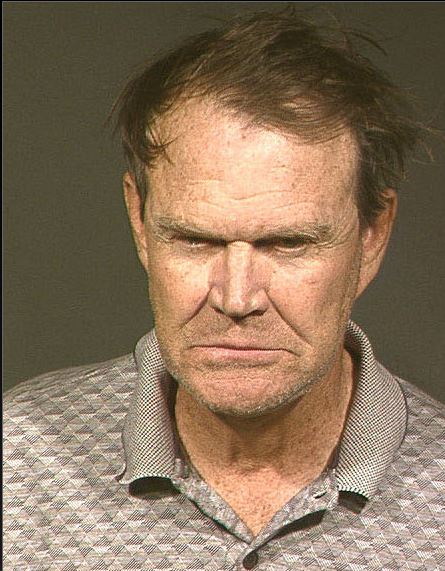
D.U.I.
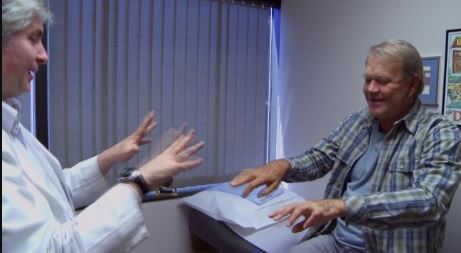
Alzheimer’s











 Trey Gowdy
































 Get Off My Lawn